
Commercial Ice Machine Sales & Maintenance
Commercial Ice Machine Sales & Maintenance in York, NE
Condenser coils on a ice machine should be cleaned about every 90 days, and in a dusty or greasy kitchen even that stretches the interval. A coated coil raises head pressure, drives up energy use, and shortens compressor life. Central Nebraska Refrigeration maintains ice machines for restaurants, grocers, florists, and food processors across York, NE. This page covers coil cleaning, defrost faults, door hardware, temperature calibration, and refrigerant checks on both custom and packaged ice systems.
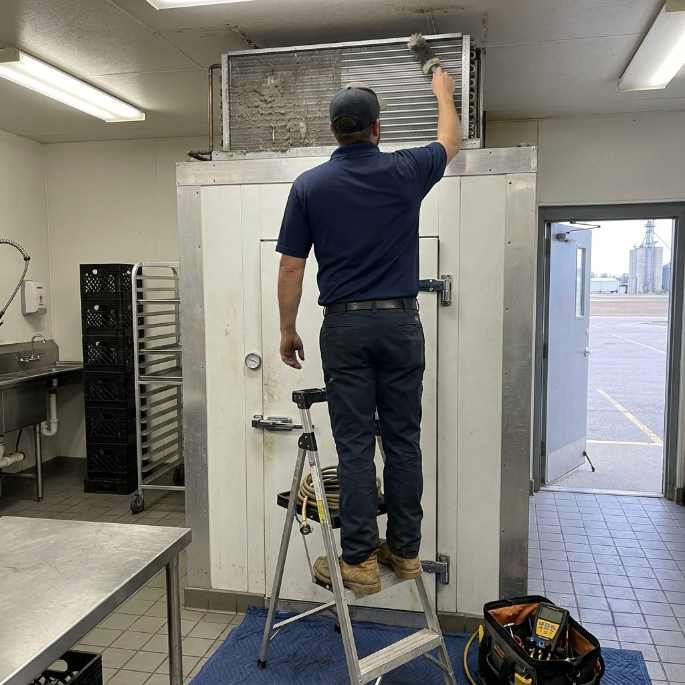
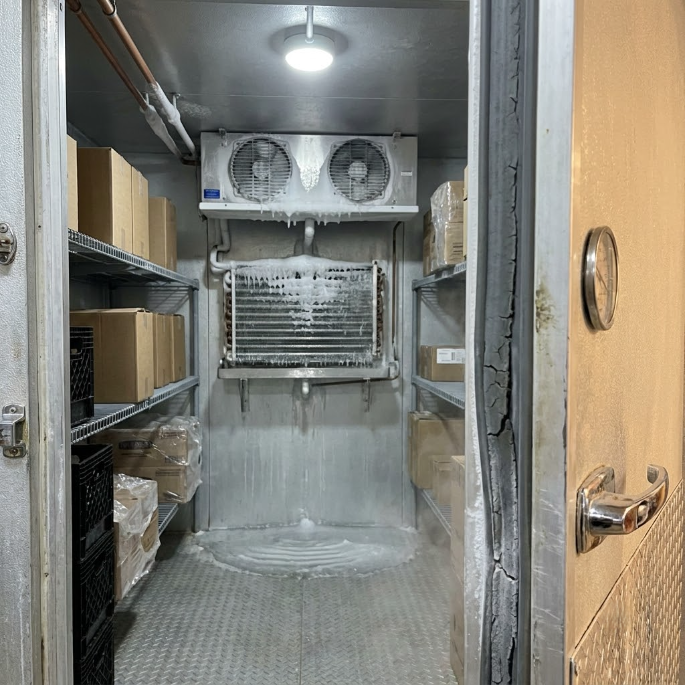
An Ice Machine FAILS SLOWLY, THEN ALL AT ONCE.
Boxes rarely quit without warning. A gasket hardens, warm air leaks in, the evaporator ices, the defrost cycle cannot keep up, and the compressor runs longer every week to hold the same temperature. Nothing looks broken at all until the morning the thermometer reads 46 degrees and there is a full weekend of product sitting inside.
Maintenance is simply a matter of catching that sequence early. A quarterly visit costs a small fraction of one emergency call plus the inventory you had no choice but to throw away.
- Condenser and evaporator coil cleaning
- Defrost cycle testing and adjustment
- Door seal, gasket, and closer service
- Temperature calibration with logged readings
WALK-IN COOLERS AND FREEZER MAINTENANCE
EVERY DEGREE OF DRIFT IS INVENTORY AT RISK.
Nebraska's food code holds cold storage at 41 degrees or lower and freezers at zero, so a box running 3 degrees warm is not a minor annoyance. It is product you may not legally be able to sell and a violation waiting for the next inspection. Regular service keeps the margin between your set point and that legal line wide enough that a busy service with the door swinging never puts you over it.
HUMID SUMMERS PUT NEBRASKA WALK-INS UNDER REAL STRAIN.
Moist air entering a cold box condenses and freezes on the evaporator coil. In July that happens far faster than in February, which is why boxes that behave all winter start icing in summer. Defrost timers set once at installation rarely suit both seasons. We adjust defrost frequency and duration to the load your box actually carries, and check that heaters and drain lines are clearing the water they produce.
NOTHING BEHIND A WALK-IN PANEL SURPRISES US.
Failed defrost heaters, cracked drain pans, hardened gaskets, corroded contactors, undersized condensing units inherited from a previous tenant. We have opened enough boxes over 20 years to recognize the pattern quickly instead of chasing symptoms around the room. That experience shows up as shorter diagnostic time on your invoice and repairs that hold, rather than a return visit for the same fault 6 weeks later.
WHY CHOOSE US FOR WALK-IN COOLERS AND FREEZER MAINTENANCE.
Product Protected, Not Just Equipment
The point of the visit is what sits on the shelves. Holding temperature stable protects the value of your inventory, keeps you inside food code limits, and removes the quiet losses that come from product quality slipping before anything technically fails.
Energy Bills That Stop Climbing
Clean coils, tight gaskets, and a correctly tuned defrost cycle let the compressor run less to hold the same temperature. That difference is visible on the utility bill within a couple of months and compounds across every year the box stays in service.
Fewer Emergency Calls
Most walk-in failures announce themselves weeks in advance to someone who knows the signs. Catching a failing heater or a sagging door during a scheduled visit costs far less than the after-hours call, the lost product, and the closed service it prevents.
Readings You Can Show an Inspector
Each visit leaves behind documented temperatures, pressures, and adjustments. When a health inspector or a corporate auditor asks how your cold-holding equipment is maintained, you produce a written record rather than an assurance, which is a considerably stronger position.
Longer Life From the Box You Have
Walk-in systems that are maintained properly commonly reach 15 to 20 years. Neglected ones fail far sooner, and replacement becomes a capital project rather than a simple repair. Consistent service pushes that expense years further down the road.
Repairs and Replacement Under One Roof
If a box genuinely has reached the end, we design and install custom walk-in coolers and freezers sized to your space and volume. You are not handed off to another company halfway through solving your own storage problem.
WHAT WE MAINTAIN
OUR WALK-IN COOLER AND FREEZER MAINTENANCE WORK
Six areas make up a full maintenance visit, and each one targets a failure path that genuinely takes walk-in boxes out of service in a working commercial kitchen.
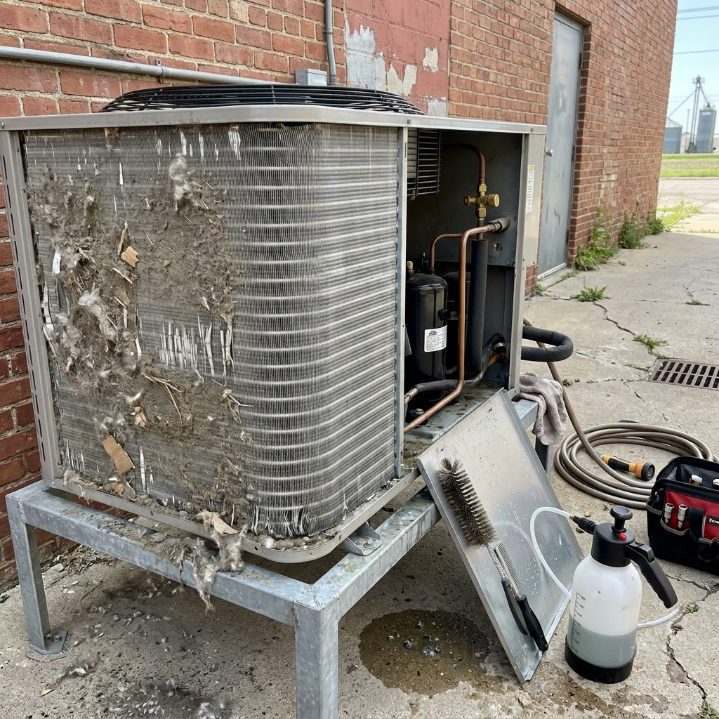
COIL CARE
Condenser and Evaporator Coil Cleaning
Coils are cleaned back to bare fin so heat transfer returns to design. Dust, grease, and packaging debris insulate the surface, forcing longer run times and higher head pressure that quietly shortens the life of an expensive compressor.
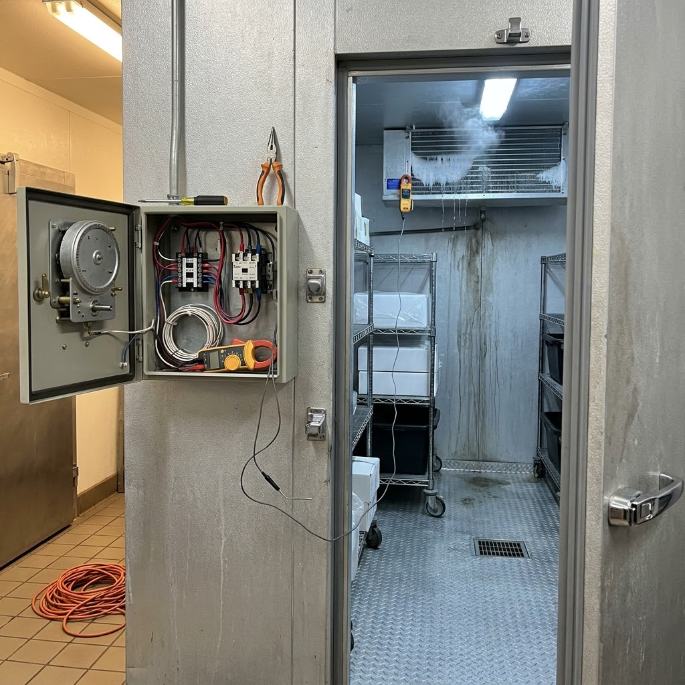
DEFROST CHECKS
Defrost Cycle Inspection and Adjustment
Defrost frequency, duration, and termination are tested against how the box is actually loaded. Too little defrost ices the coil solid, too much warms the product, and factory settings almost never suit a real kitchen through both seasons.
DOOR HARDWARE
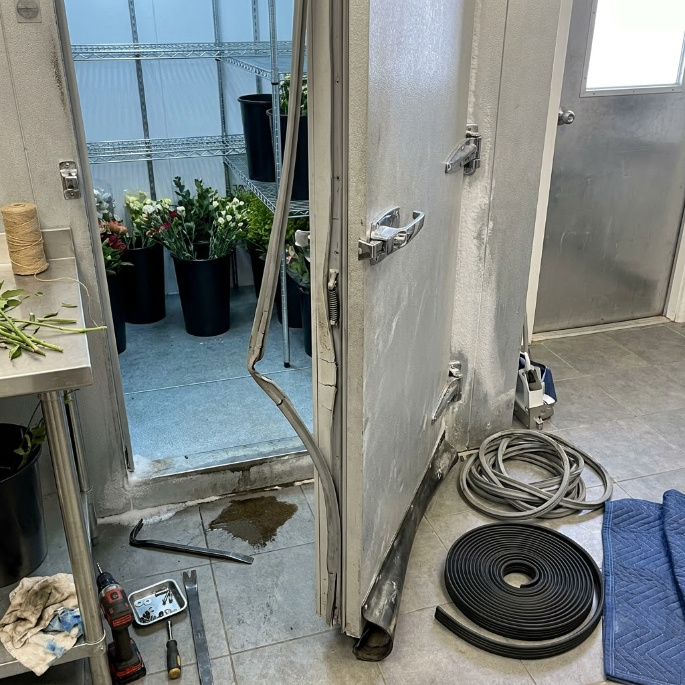
Door Seal, Gasket, and Closer Service
Gaskets, sweeps, hinges, and closers are inspected and replaced as needed. A door that no longer pulls shut or seals cleanly admits warm humid air continuously, which is the single most common cause of icing and rising energy use.
TEMPERATURE CONTROL
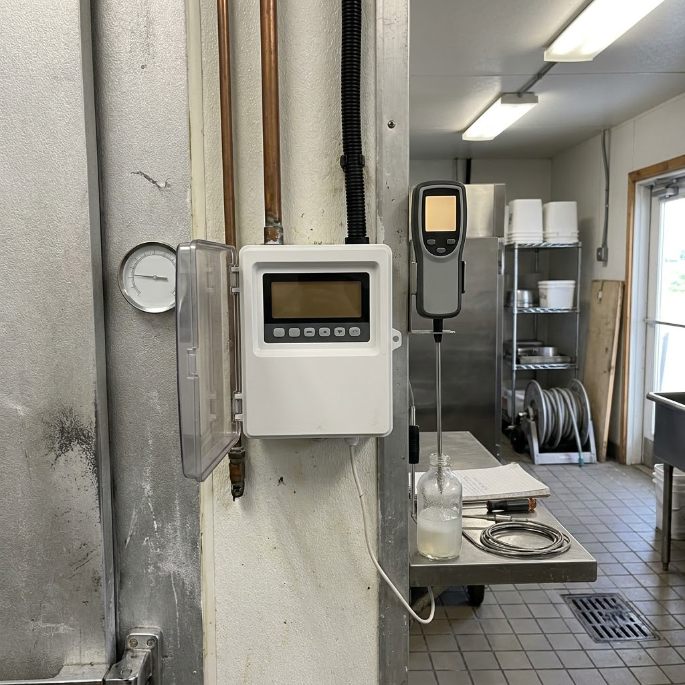
Thermostat and Monitoring Calibration
Controls and monitoring systems are verified against calibrated instruments, because a display reading 38 degrees while the box sits at 43 is worse than no display at all. Set points get adjusted to give you safe operating margin.
REFRIGERANT WORK
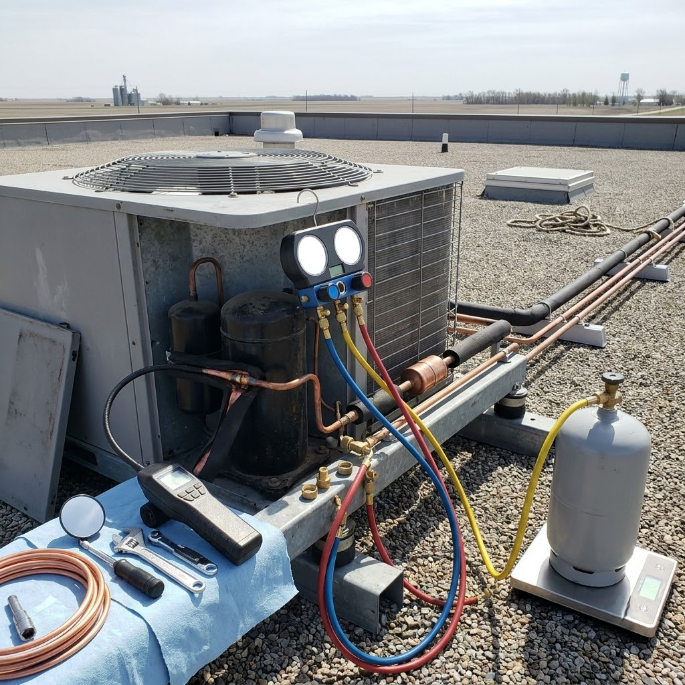
Refrigerant Charge and Leak Checks
Charge is measured rather than guessed, and any suspected leak is traced using proper electronic detection equipment. Repeated top-ups without finding the source waste refrigerant, breach federal requirements on larger appliances and leave the underlying fault entirely unaddressed.
DRAIN LINES
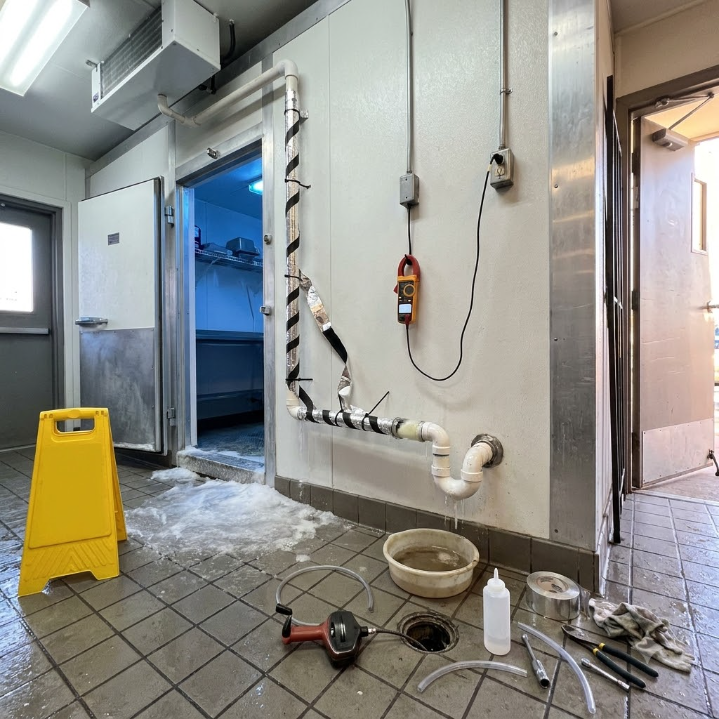
Drain Line Clearing and Heater Checks
Condensate lines and their heat tape are cleared and tested so meltwater leaves the box instead of freezing in the line. A blocked drain floods the floor, ices the threshold, and turns a routine visit into a safety problem.
Insert Title
Insert Title
THE WORD ON OUR WORK
WHAT OUR CLIENTS SAY.
Kitchen managers and grocery operators across central Nebraska rate our service at 5.0 stars. What they mention most is straightforward: the box holds temperature, and the same technician knows their equipment. If we maintain your walk-in, a short review helps another operator choose confidently.
Common Questions
FREQUENTLY ASKED QUESTIONS.
The questions kitchen managers and store owners ask us most often about keeping walk-in coolers and freezers holding temperature, running efficiently, and passing their next inspection.
How often should walk-in condenser coils be cleaned?
About every 90 days for most commercial installations, and more frequently in greasy kitchens or dusty environments. Twice a year is the absolute minimum, though coils in that situation are usually already costing you noticeable energy and compressor life.
What temperature should a walk-in freezer be set at?
Zero degrees Fahrenheit or lower satisfies food code for frozen storage, and many operators run between negative 10 and zero to build in margin. Coolers sit at 41 degrees or below, with most operators setting them nearer 36 to 38.
Why is my walk-in freezer icing up?
Warm humid air is getting in, or defrost is not clearing the coil. Failed gaskets, a door that will not latch, a broken defrost heater, an incorrectly set timer, and a blocked drain line are the usual culprits.
How often should walk-in door gaskets be replaced?
Inspect them quarterly and replace them once they harden, tear, or stop sealing against the frame. Most gaskets last 3 to 5 years in commercial service, though heavily used doors and forklift traffic can cut that considerably shorter.
What causes a walk-in cooler drain line to freeze?
Failed heat tape, a line pitched incorrectly, or a drain routed through the freezer without any protection. Water backs up, freezes in the pan or the line, and eventually spills onto the floor where it becomes a slip hazard.
Why is my walk-in cooler running constantly?
Continuous running points to a dirty condenser, low refrigerant charge, a failing door seal, an iced evaporator, or a condensing unit undersized for the load. Central Nebraska Refrigeration diagnoses that difference on site for operators across York, NE.
How long do walk-in coolers and freezers last?
The insulated box itself often lasts for decades, while the refrigeration system inside commonly runs 15 to 20 years with consistent maintenance. Condensing units and evaporators are replaceable, so a tired system rarely means replacing the entire structure.
What is a defrost cycle and how often should it run?
Defrost melts frost off the evaporator coil so airflow and heat transfer stay normal. Coolers often need it a few times daily and freezers commonly 4 to 6 times, adjusted by Central Nebraska Refrigeration to suit each York, NE box.
HOW WE WORK
FROM FIRST INSPECTION TO LOGGED READINGS, HERE IS HOW.
STEP 01
Review the Box and Its History
We check what the box holds, how often the door opens, what problems you have noticed, and what previous service found. That context decides where the visit focuses and how often we should be coming back.
STEP 02
Inspect the Mechanical Side
Condenser, evaporator, fan motors, contactors, controls, and the condensing unit all get examined. Readings are taken while the system runs, since a fault that only appears under load will never show on a box sitting idle.
STEP 03
Clean the Coils Properly
Condenser and evaporator coils are cleaned to bare fin rather than blown off superficially. Restored heat transfer is where most of the energy savings and most of the added compressor life actually come from on a walk-in.
STEP 04
Test Defrost and Drainage
Defrost initiation, duration, and termination are checked, along with heaters, pans, and drain lines. Settings get adjusted to the load and the season rather than left wherever the installer set them years ago.
STEP 05
Service the Doors and Seals
Gaskets, sweeps, hinges, closers, and thresholds are inspected and repaired. Door problems cause a large share of icing and energy complaints, so this step often delivers more improvement than anything mechanical inside the box.
STEP 06
Calibrate, Log, and Schedule
Controls are verified against calibrated instruments, final readings recorded for your file, and the next visit scheduled at an interval matched to how hard the box works. Nothing is left to memory or good intentions.
GET YOUR UPFRONT ESTIMATE
LET US LOOK BEFORE THE BOX LETS YOU DOWN.
The cheapest walk-in repair is the one done during a scheduled visit on a quiet Tuesday. Central Nebraska Refrigeration maintains and repairs walk-in coolers and freezers for businesses across York, NE, and designs custom cold storage when an existing box no longer fits the volume you move. Tell us what your box has been doing through our contact page, and we will get a technician out with pricing agreed before any work begins.
WHAT YOUR MAINTENANCE VISIT COVERS:
- Condenser and evaporator coils cleaned to bare fin
- Defrost cycle tested and adjusted to your load
- Door seals, hinges, and closers inspected
- Refrigerant charge measured and leaks traced
- Controls calibrated against verified instruments
- Readings logged for your compliance file